Share
Sunley Gardens
Sunley Gardens Squirrel-Proof Bird Feeder
6 in stock
Couldn't load pickup availability
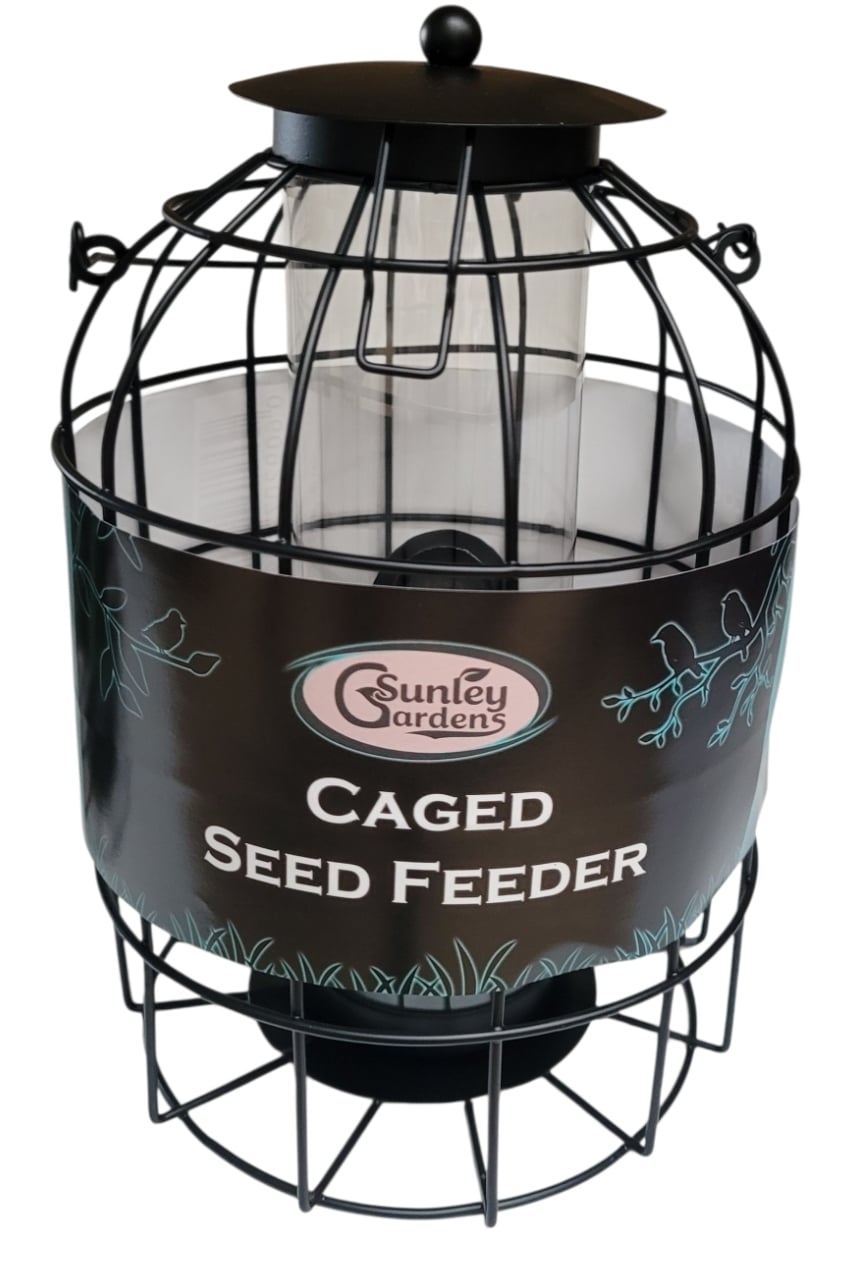
Sunley Gardens Squirrel-Resistant Caged Wild Bird Feeder
Help smaller garden birds feed with less competition using the Sunley Gardens Squirrel-Resistant Caged Wild Bird Feeder. Available in Nut, Seed and Fat Ball styles, each feeder combines an internal food holder with a protective outer metal cage.
The surrounding cage is designed to restrict access by squirrels and larger birds while allowing smaller garden birds to reach the food inside. This can help reduce food loss, discourage larger visitors from dominating the feeding area and create a more sheltered place for smaller birds to feed.
Each style is designed for a particular type of wild-bird food. Choose the Nut Feeder for suitable peanuts, the Seed Feeder for free-flowing wild-bird seed or the Fat Ball Feeder for standard fat balls without nets.
The feeder can be suspended from a secure branch, feeding station or suitable garden hook. Its removable top provides access to the internal feeder for refilling and routine cleaning.
Key benefits
- Protective caged wild-bird feeder
- Designed to deter squirrels and larger birds
- Allows smaller garden birds to access the internal feeder
- Helps reduce competition and unnecessary food loss
- Available for nuts, seed or fat balls
- Strong metal outer cage
- Hanging design for garden feeding stations and suitable hooks
- Removable top provides access for filling and cleaning
- Suitable for year-round supplementary wild-bird feeding
- Useful in gardens, patios and suitable balcony areas
Available styles
Nut Feeder
The Nut Feeder contains an internal metal mesh holder designed for suitable wild-bird peanuts.
The mesh allows birds to remove smaller pieces without carrying away an entire peanut. This is especially important during the breeding season, when adult birds may be taking food back to young birds.
Only use fresh, unsalted peanuts specifically sold for wild birds. Never offer salted, seasoned, roasted or mouldy nuts.
Seed Feeder
The Seed Feeder contains a clear plastic tube with feeding openings. The transparent chamber makes it easier to monitor the remaining food level and identify when the feeder needs to be refilled or cleaned.
Suitable foods may include free-flowing wild-bird seed mixtures, sunflower seeds and other seed types compatible with the feeding ports.
Avoid wet, sticky or heavily compacted foods that could block the openings.
Fat Ball Feeder
The Fat Ball Feeder contains an internal metal holder for standard wild-bird fat balls.
Remove all plastic or synthetic netting before placing fat balls inside the feeder. Fat-ball nets can trap birds’ feet, legs or beaks and should never be hung outdoors.
The matching feeder design can accommodate approximately four standard fat balls, although the capacity of the Sunley Gardens version should be checked against the physical product.
Approximate dimensions
Diameter: Approximately 17.5 cm
Feeder body height: Approximately 26 cm
The complete hanging height may be greater when the handle is raised. Measurements should be checked against the physical product before being published as exact.
Suitable birds
The protective cage is designed primarily for smaller garden birds such as:
- Blue tits
- Great tits
- Coal tits
- Finches
- Sparrows
- Robins
- Siskins
- Nuthatches
- Other suitably sized wild birds
The birds attracted will vary according to the selected food, season, location and surrounding habitat.
How to fill
Remove or open the top of the feeder and fill the internal holder with the correct type of fresh wild-bird food.
Do not overfill or force food tightly into the feeder. Check that the lid is closed securely before hanging it outside.
Only use the Nut Feeder for suitable peanuts, the Seed Feeder for compatible free-flowing seed and the Fat Ball Feeder for fat balls without nets.
Installation
Hang the feeder from a secure branch, feeding station or outdoor hook capable of supporting its filled weight.
Choose a reasonably sheltered position that gives birds a clear view of the surrounding area. Keep the feeder away from locations where cats or other predators could hide and approach unnoticed.
Squirrels are agile and persistent, so the cage should be treated as squirrel-resistant rather than completely squirrel-proof. Positioning the feeder away from fences, roofs, branches and other jumping points can improve its effectiveness.
Do not hang the feeder directly above doorways, seating areas, vehicles or fragile items.
Feeding guidance
Check the feeder regularly and refill it as required.
Only add an amount of food that is likely to remain fresh. Smaller and more frequent refills may be preferable during damp or warm weather.
Remove old, wet, mouldy, compacted or contaminated food immediately. Never place fresh food on top of spoiled food remaining inside the feeder.
Provide fresh, clean drinking and bathing water nearby where possible.
Cleaning and care
Clean the feeder regularly to help reduce the build-up of old food, droppings and other contamination.
Empty all remaining food and remove the internal holder where possible. Wash the feeder using warm water and a suitable wildlife-safe cleaning product.
Use a feeder brush to reach the cage, mesh, tube and feeding openings. Rinse every component thoroughly and allow it to dry completely before adding fresh food.
Never refill a wet feeder, as trapped moisture may cause food to spoil.
Safety information
Inspect the outer cage, hanging attachment, lid and internal feeder regularly.
Stop using the product if:
- The hanging attachment becomes loose or damaged
- The lid no longer closes securely
- Wire becomes bent, broken or sharp
- The plastic seed tube becomes cracked
- Components become heavily corroded
- Any opening could trap or injure a bird
Mount the feeder securely and position it away from areas where pets or children could become trapped or injured.
This feeder is intended for outdoor wild-bird feeding and is not a toy.